Behind the Screen: The Hidden Cybersecurity Risks of Global Video Chat Platforms
Cybersecurity Risks of Global Video Chat Platforms.
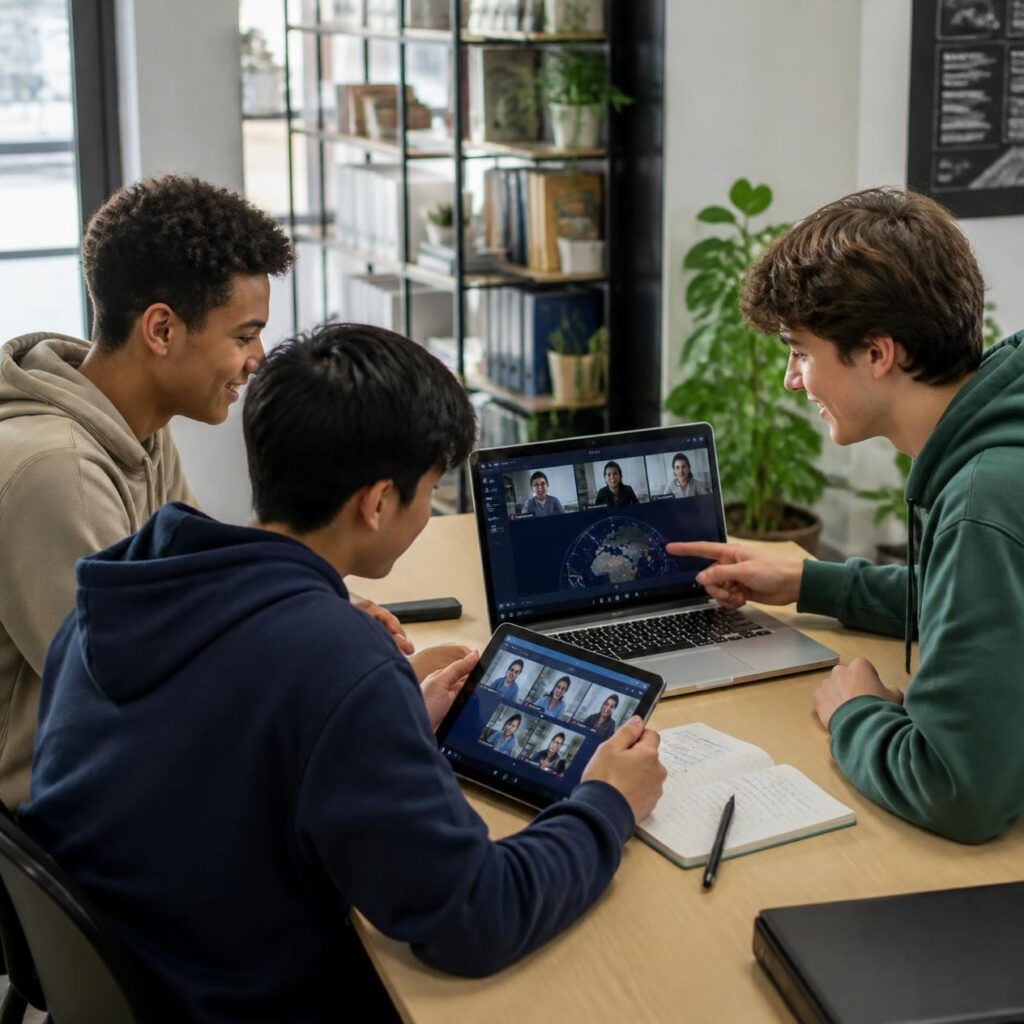
The other day, my son invited three of his buddies over to our house for some afternoon fun. After some time in the backyard, they quickly moved to the gaming room where they started playing games. After a short time, I noticed a bunch of laughter coming from the gaming room as well as some occasional teenage derogatory language. Alarmed, I stepped into the room to see what was going on. Well, they had a video chat app on the screen which I wasn’t familiar with, and they were interacting through a video chat with 3 girls in a bedroom. These were girls from Bergen, which is a city in Norway and they were asking questions to each other. What is it like in the United States? What’s it like in Norway? What do you do for fun? What’s the weather like outside right now? All innocent enough. Until…
…the video chat abruptly cut off to display static, right until the next scan connected a video feed to a young man sitting in a room on a couch. “Hey, who are you?”, my son asked to the stranger. As I looked closer at the screen, I could see a small caption that displayed Germany as the country. “I am in Germany”, replied the contact. There was laughter in the room from my boys. Here I was, observing a very intriguing interaction between four boys in our gaming room and a young man in Germany. I began to think about the security controls I have in place, or lack thereof. I asked the boys, “What is this website you are connecting to?” They explained that the website is Azar, which is a video chat platform for interacting with others around the world. I had never heard of this, but was intrigued, yet alarmed at the same time. Now, I don’t really have any sophisticated enterprise tools governing our family gaming room, other than what’s available with Microsoft (family safety settings, Defender antimalware, etc…). So, obviously, it wasn’t blocked by the Microsoft content settings. Freely available to anyone who browses to Azar and creates a sign-in. But the boys had to sign in somehow? Looked easy enough to provide your phone, Google, Facebook or Apple credentials, and you’d have instant access.
“What type of camera are you using?”, said the young German man. This alarmed me instantly based on the sensitivity of the topic and the possibility of the reconnainsance phase of an orchestrated attack. “What type of question is that?”, replied my son’s friend. “What type of camera do you have?”, he asked in return. The young German looked puzzled at first, but then confidently stated, “I have a Logitech!” The boys looked at each other and started giggling. Tthen one of them asked, “Why are you asking about our camera?” At this point, I became nervous that one of them might say something inappropriate. So, I stepped back out of the view of the camera, and jumped in, however quietly whispering… “Hey boys, let’s keep off the subject of cameras with our German friend. In fact, let’s move on to the next one”. And that was it, in the blink of an eye, the system scanned to the next video chat, which appeared to be an older man and woman by a pool somewhere, in some foreign country. This went on for a few more minutes before I drew the curtain on the new experiment, told the boys that I’ve had enough and ushered them out of the gaming room and into the backyard.
Afterwards, I had a lot to think about. These types of apps are freely available for anyone to participate in video chats with random people from all around the world. In some ways, its entertaining, sparks curiosity, and could be highly educational, but I couldn’t help thinking of the cybersecurity and privacy concerns from engaging with the platform. Not to mention the behavioral concerns around decency, ethics, morality, politeness, etc..
Here are some of the risks of using AI-based, real time video chat platforms, such as Azar.
Cybersecurity and Privacy Risks
1. Sextortion and Blackmail
The most widespread threat reported by users on random video chat platforms is sextortion. Malicious actors or automated bots frequently manipulate users into engaging in compromising or explicit behavior on camera.
- The Attack Mechanism: Scammers record the live video stream without the user’s consent.
- The Fallout: They then use social engineering or OSINT (open-source intelligence) to uncover the victim’s real identity, phone number, or social media profiles, demanding money under the threat of distributing the recorded footage to family members or employers
2. Excessive Device Permissions and Data Interception
To function properly, the mobile application requires “dangerous permissions” as defined by mobile operating systems. Security analyses of Azar have highlighted discrepancies in privacy declarations and extensive access.
- What it accesses: The app demands continuous access to the device’s camera, microphone, precise foreground location, photo library, and contacts.
- The Risk: If the application or the third-party libraries it embeds suffer a software vulnerability, an attacker could exploit these permissions to eavesdrop on the user, steal device data, or manipulate the device remotely.
3. Data Privacy and AI Facial Mapping
Azar implements automated AI systems and facial recognition to handle age verification and content moderation.
- Biometric Risk: During identity checks, the app creates a “face map”. While the platform claims to delete the biometric face map within 24 hours, the audit images and age-check outcomes are stored on cloud servers (like AWS) for up to 3 to 12 months.
- Data Breach Potential: Any centralized storage of user selfies, moderation records, and metadata is a prime target for credential harvesting and server-side data leaks.
4. Direct Social Engineering and Phishing
Because users are paired instantly without a screening phase, malicious entities use the platform to launch swift social engineering attacks. Scammers direct users away from the monitored platform to unmonitored external chat applications (like WhatsApp or Telegram) by promising explicit content or financial gains. Once off-platform, users are highly susceptible to malicious link clicks, credential harvesting, or malware downloads.
Some Words of Advice
Parents
Ensure that your systems have guardrails in place for sites like Azar. There are plenty of opportunities for good, positive and educational interaction. However, ensure that you’ve talked to your children about this type of interaction, and the proper behavior expected when interacting with the platform. Supervise, teach and protect them as this, quite literally is inviting the world into your home’s private space. The cybersecurity risks of global video chat platforms are widespread.
If you are going to allow your children to access apps such as Azar, ensure that you completely vet the platform.
- Review the site: They have a dedicated Safety, Security and Privacy page, that you will want to thoroughly review and understand.
- Network security settings: Beyond that, ensure that you have family safety and privacy settings configured properly for your home network.
- Just one: Only allow one platform at a time.
For some additional information, please see Livestream and online video apps.
Business Leaders
We often think of Cybersecurity relating to our workplace, protecting data and ensuring that staff are following policy and not engaging in unvetted and unknown sites. It’s critical to ensure that the proper content filters are working and you are able to block malicious or otherwise offensive content. Content filters have traditionally included vast databases of sites which contain offensive content such as pornography, gambling, alcohol and drugs, violence and hate speech, etc…
- Acceptable Use: Implement strict Acceptable Use Policies (AUP) and geofencing.
- Mobile Device Controls: Deploy Mobile Device Management (MDM) to block unapproved apps.
- Security Awareness Training: Mandatory Security Awareness Training to cover topics of Social Engineering and Sextortion.
- Enforce Zero-Trust Network Access & Firewall Blocks: Configure your office’s Next-Generation Firewall (NGFW) or DNS filtering service (such as Cisco Umbrella or Cloudflare One) to block the domains, IP blocks, and signatures associated with unapproved consumer chat platforms.
- Address Hidden Costs & Legal Vulnerabilities: Allowing these apps on company assets introduces massive compliance and financial liabilities.
The Bottom Line
International video chat platforms are fun, fast, and globally connected — but they’re also a growing cybersecurity blind spot. As attackers become more sophisticated and privacy laws struggle to keep up, users must stay vigilant. The dangers aren’t always obvious, but they’re very real.
This is a critically important topic to understand. Be aware of the risks. As always, we at 2Bware can help you strengthen your business defenses and help evaluate your business cybersecurity risk. Contact 2Bware today for tips and advice about how to get prepared.